
 Culinary Literacy and Food Science Skills
Beyond the List: Teaching Students to Critically Read and Deconstruct a Recipe
Learn how to help students view recipes as scientific experiments by deconstructing procedures and applying critical analysis to their cooking techniques.
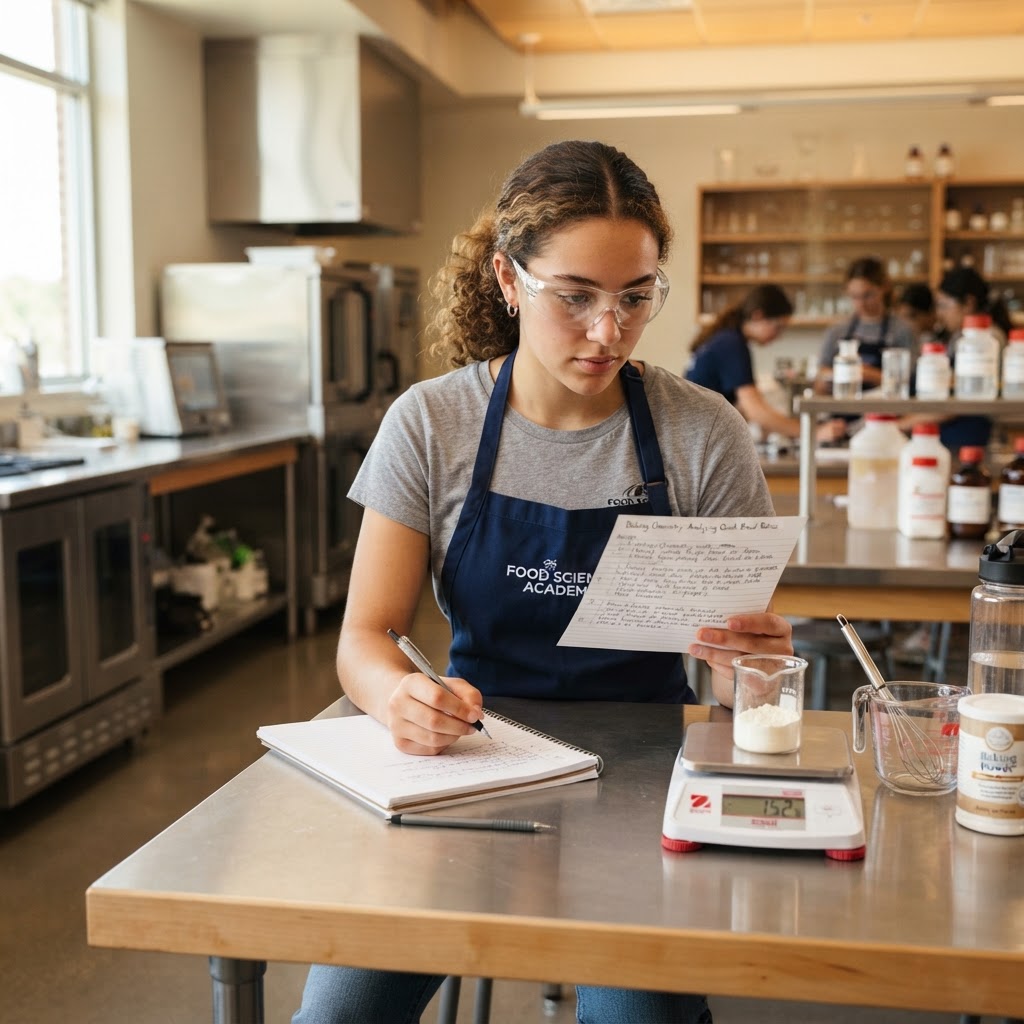
A recipe is far more than a simple list of ingredients and a series of commands. It is a technical protocol that functions as a scientific experiment. In high school food science or culinary arts, students must learn to view every recipe as a hypothesis. When they follow the steps, they are testing whether those specific procedures produce the expected results. Moving students away from rote memorization and toward critical deconstruction helps them grasp the complex chemistry of cooking. When students understand the science behind the steps, they stop being followers and start being innovators in the kitchen.
The Anatomy of a Technical Procedure
Every recipe relies on three main components. First, there are the ingredients. These provide the chemical building blocks for the entire project. Second, there are the ratios. These determine the structural integrity, flavor profile, and final texture of the food. Finally, there are the procedures. These dictate how energy and mechanical force alter the state of the matter. When students read a recipe, they often focus only on the ingredients list. Teach them to look closer at the verb choices instead. Are the instructions telling them to whisk, fold, or cream? Each verb implies a specific physical or chemical change that is essential to success.
Decoding the Chemistry of Verbs
Whisking is not just mixing ingredients. It is the physical act of incorporating air into a protein or fat matrix to create volume. Folding is a gentle technique designed specifically to preserve those tiny air bubbles. Creaming sugar into butter creates small holes in the fat, which carbon dioxide bubbles will later expand during the baking process. Ask your students to define these verbs in terms of physical force. When they understand the purpose of each motion, they become much better at troubleshooting their own mistakes. Instead of blaming the oven or the ingredients, they learn to analyze their technique.
The Role of Quantitative Reasoning
Measurement is the absolute foundation of consistency in food science. High school students often guess on liquid measurements or pack dry ingredients inconsistently. Have your students weigh ingredients in grams to see the massive variability of volume measurements. If a recipe calls for one cup of flour, the mass can vary by twenty grams depending on how the student scoops. This discrepancy changes the vital ratio of starch to moisture. When the chemistry of these ratios shifts, the final texture changes drastically. This quantitative analysis is a vital part of scientific thinking and prepares students for more complex laboratory work.
Building a Deconstruction Worksheet
You can guide students through this analysis with a simple, structured template. Ask them to identify the variable, the procedure, and the expected outcome. For a cake recipe, the creaming stage is the variable. The procedure is mechanical agitation. The expected outcome is a light, aerated structure. If the cake turns out dense, students can look back at their procedural notes to see if they provided enough mechanical energy. This creates a helpful feedback loop that encourages critical thinking and deepens their understanding of food systems.
Advanced Application in the Classroom
To deepen their skills, push students to move beyond the printed page. Ask them to investigate how temperature affects protein coagulation or how fat type changes the spread of a cookie. By treating the kitchen as a lab, students learn that every action has a direct reaction. This mindset transforms a standard cooking class into a rigorous scientific experience. Use these strategies to bridge the gap between home cooking and formal food science education.
Classroom Takeaways
- Require students to write a prediction about the physical state of the food before they begin the procedure.
- Provide a list of cooking verbs and have students define them based on the physical force involved.
- Have students perform a side by side lab where one group follows instructions perfectly and the other group modifies one procedural step to observe the chemical result.
- Transition students from volume to mass measurements to improve their quantitative reasoning skills.
- Ask students to create a flow chart of the recipe to visualize the timeline of chemical reactions like leavening or protein coagulation.
- Encourage students to record data in a laboratory journal throughout every kitchen project.
- Host a post-lab debriefing where students present their findings and explain why their recipe succeeded or failed based on their procedural choices.
Was this article useful?
Sign in with a free or paid account to react. A paid plan is not required.
Enjoy this post? Subscribe to get new Food Science Toolbox articles delivered to your inbox.