
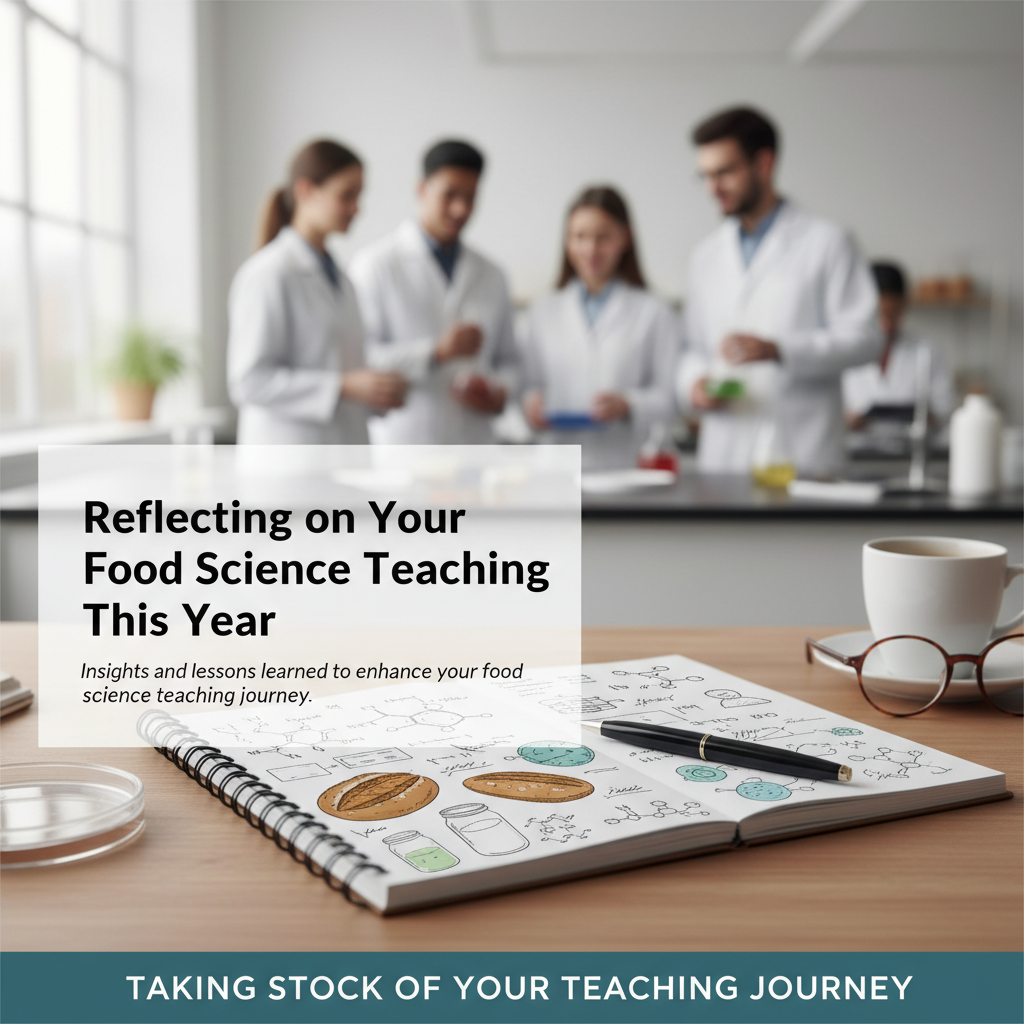
 End of School Year Reflections
Reflecting on Your Food Science Teaching This Year
Insights and lessons learned to enhance your food science teaching journey.
Taking Stock of Your Teaching Journey
As the school year wraps up, it’s a good time to reflect on your food science teaching. Looking back allows you to see what worked, what didn’t, and how your students engaged with the material. This isn't just about grading papers; it’s about shaping future lessons to be even more effective and enjoyable.
Evaluating Successful Lessons
Think about the lessons that energized your class. What topics sparked lively discussions? For instance, did a lesson on fermentation result in students wanting to create their own yogurt or sourdough starter at home? Engaging topics are often the ones that connect to real-life experiences. When students see the relevance of food science in their daily lives, they tend to pay more attention.
Ask yourself: Which lessons had the highest levels of student interest? Did you notice any repeated questions or excitement about certain experiments? Recognizing patterns in student enthusiasm will help you highlight those topics next year.
Identifying Struggles
Now, let’s focus on the tougher moments. It’s completely normal for certain concepts not to land as expected. For example, understanding enzymes might have confused some students who struggled with how these biological catalysts work in food processing.
Consider specific challenges your class faced. Reflect on questions like: Where did students seem lost? Was it during practical experiments or theoretical concepts? Addressing these areas can transform your teaching approach for the better.
Engagement Changes Over Time
Throughout the year, student engagement can shift dramatically. Perhaps the excitement of the first unit fizzled out as the year progressed. Take a moment to assess how students responded to different teaching methods. Did hands-on experiments, like creating emulsions for salad dressings, draw more interest compared to lectures?
Asking questions like What teaching methods captured student attention? and How can I build on this engagement? can help you refine your approach. Consider incorporating more interactive activities next year to keep that energy alive.
Simple Reflection Questions
Reflection doesn’t have to be complicated. Here are a few simple questions to guide your thoughts:
What were my top three successful lessons this year, and why?
What were my biggest teaching challenges?
How have student attitudes about food science changed?
What new ideas or methods would I like to try next year?
Taking time to answer these questions can provide valuable insights for your future teaching practices. It makes it easier to build on successes and address challenges directly.
Key Takeaway
Reflecting on your food science teaching can unlock the potential for improvement. By considering what worked and what didn’t, you can create an even better learning environment for your students next year. Remember, teaching is a journey, not a destination, and each year brings new opportunities to grow and engage your students.
Was this article useful?
Sign in with a free or paid account to react. A paid plan is not required.
Enjoy this post? Subscribe to get new Food Science Toolbox articles delivered to your inbox.