
Mastering the Rise: A Practical Guide to Yeast Fermentation for the Culinary Classroom
When dough fails to rise in the lab, this guide explains the biological process of fermentation to help students predict and control their bread results.
The Living Engine of Bread
Bread dough is more than just a mixture of flour, water, salt, and yeast. It is a biological environment where tiny living organisms work to change the physical structure of your ingredients. Yeast, specifically Saccharomyces cerevisiae, acts as the primary engine for this transformation. Understanding how these cells function turns the mystery of rising dough into a predictable scientific process you can demonstrate in your classroom.
Yeast are single-celled fungi that feed on sugars found in flour. When you mix them into dough, they begin to consume these simple carbohydrates. Through a process called fermentation, the yeast cells convert sugar into two main byproducts. These are carbon dioxide gas and ethanol. The carbon dioxide is what creates the lift in your bread. As the gas bubbles expand, they get trapped in the gluten network, causing the dough to rise.
Managing the Microbial Environment
Think of yeast as a living workforce. Like any group of workers, their productivity depends entirely on their environment. Temperature is the most critical variable you control in the lab. Yeast thrives in warm conditions, typically between 75 and 85 degrees Fahrenheit. If the water you use is too cold, the yeast remains dormant, and the dough will not rise as expected. If the water is too hot, typically above 120 degrees Fahrenheit, the heat can damage or kill the yeast cells.
Another factor affecting yeast activity is the amount of sugar available. While flour contains starch, yeast prefers simple sugars like glucose or fructose to start the fermentation process quickly. Some recipes include added sugar or honey to provide a rapid energy boost for the yeast. This creates a faster rise, which can be useful when you are working within the constraints of a forty-five minute class period. Without enough sugar, the yeast will eventually break down starch into sugar, but this happens much more slowly.
Salt plays a unique role as a regulator. While it adds flavor, it also slows down fermentation by drawing water out of the yeast cells through osmosis. This is a beneficial effect for bakers. If fermentation happens too quickly, the bread may lack complex flavor and have a poor crumb structure. By adding salt to your dough, you effectively manage the pace of the yeast activity, ensuring a more consistent product.
The Role of Gluten Networks
The carbon dioxide produced by yeast would escape into the air if it were not for the structure of the dough. Wheat flour contains proteins called glutenin and gliadin. When you mix these with water and work the dough, they bond together to form gluten. This protein network acts like an elastic balloon.
As yeast releases carbon dioxide, the gas gets trapped inside these tiny gluten pockets. This is why kneading is such a vital step in the culinary process. Kneading organizes the protein strands into a cohesive web that is strong enough to hold the gas bubbles as they expand. If you do not knead the dough long enough, the gluten network will be weak, and the bread will end up dense or flat because the gas simply leaks out.
Practical Classroom Strategies
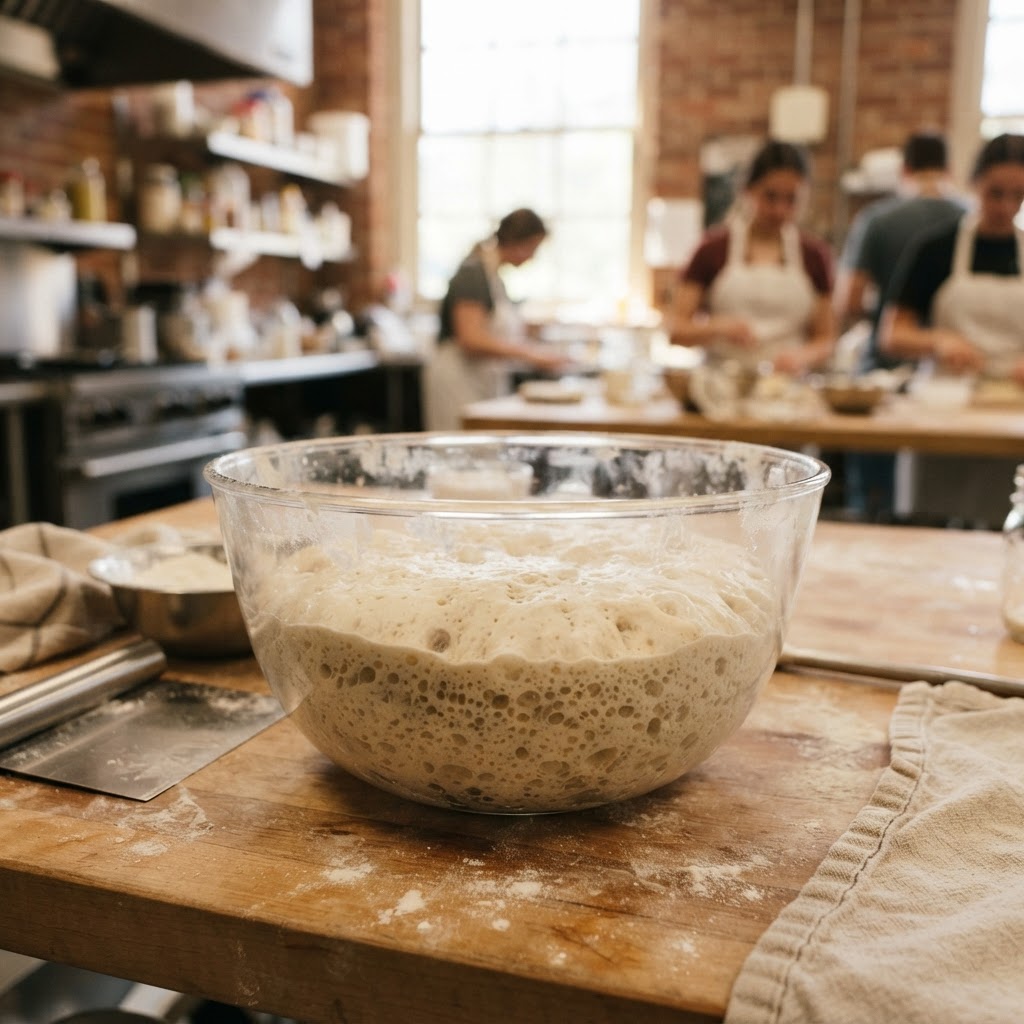
You can easily visualize these abstract concepts by using clear containers during the proofing stage. Have students mark the starting level of the dough with a piece of tape. As the yeast ferments the sugars, the students can observe the dough rising above the mark. This gives them a concrete way to see gas production in real time.
Encourage your students to test variables by modifying the temperature of the water or the amount of salt in a small sample. Even minor adjustments in your lab setup will result in noticeable differences in the final loaf. These observable outcomes help students connect the microscopic work of yeast to the physical changes in the food they are preparing. Focus on the relationship between gas production and the strength of the gluten structure to explain why some loaves succeed and others fail.
Key Takeaways
- Yeast performs fermentation to convert sugar into carbon dioxide gas, which physically lifts the bread dough.
- The gluten network acts as an elastic container that traps gas bubbles produced during the fermentation process.
- Temperature and salt serve as key regulators that speed up or slow down the rate of yeast activity.
- Successful baking relies on balancing yeast metabolism with the structural strength of the developed gluten.
Was this article useful?
Sign in with a free or paid account to react. A paid plan is not required.
Enjoy this post? Subscribe to get new Food Science Toolbox articles delivered to your inbox.